
Maintaining an attractive landscape often seems difficult to balance with environmental responsibility. However, modern lawn care practices make it possible to achieve both.
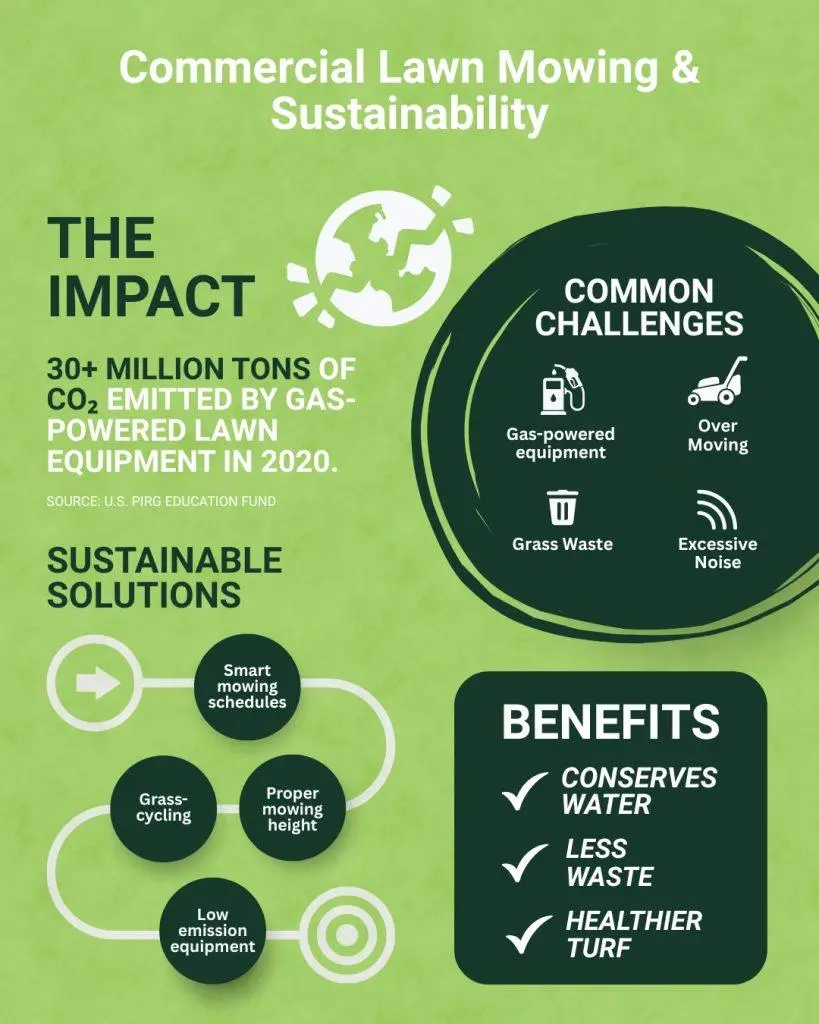
According to Environment America, fossil fuel-powered lawn equipment emitted more than 30 million tons of carbon dioxide in 2020.
As sustainability becomes a greater priority, commercial property owners are adopting smarter maintenance strategies that reduce environmental impact without compromising curb appeal.
Sustainability Challenges in Commercial Lawn Mowing
Many commercial properties are working toward sustainability goals, but lawn maintenance can present several obstacles. Understanding these challenges is the first step toward creating a more environmentally responsible landscape management plan.
-
Gas-Powered Equipment
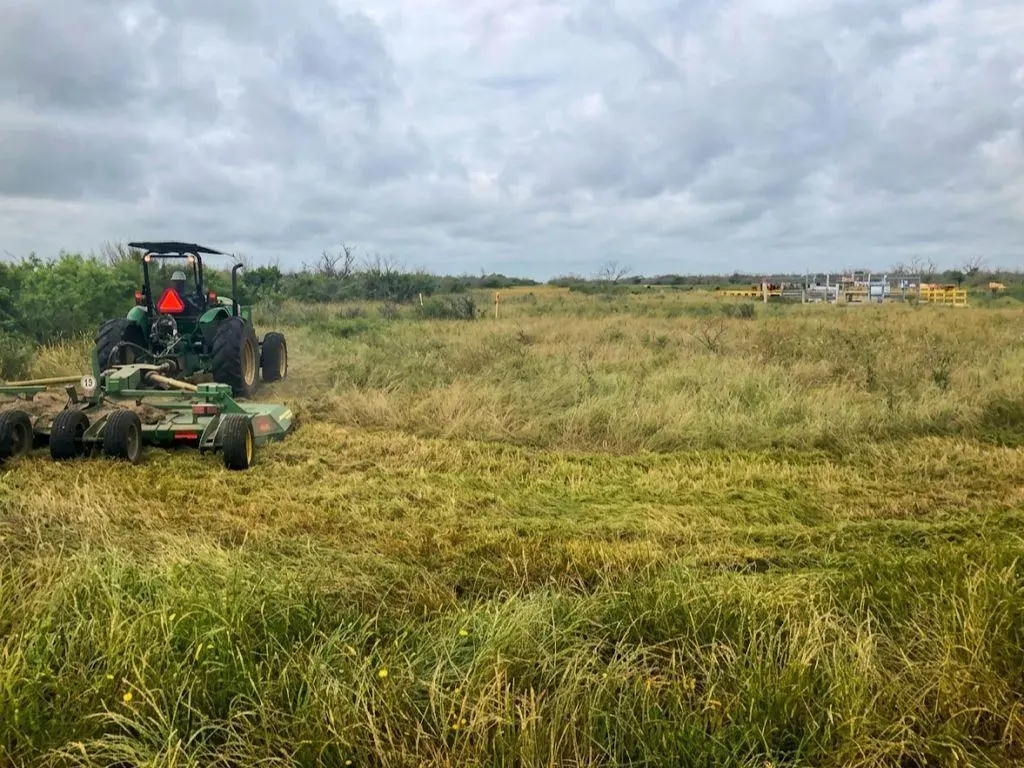
Traditional commercial lawn mowing often relies on gas-powered mowers, trimmers, and blowers. These machines can generate emissions and noise, particularly on large properties where crews spend several hours maintaining the landscape.
-
Over-Mowing
Many properties follow fixed mowing schedules regardless of actual grass growth. This can increase fuel consumption, raise maintenance costs, and place unnecessary stress on the turf.
-
Grass Waste
Grass clippings are frequently bagged and removed from the property after mowing. While this may seem like standard practice, it creates additional waste and removes nutrients that could naturally benefit the soil.
What Sustainable Commercial Lawn Mowing Looks Like
Sustainable commercial lawn mowing focuses on maintaining healthy landscapes while reducing waste and resource consumption. Small adjustments to mowing practices can improve both environmental performance and long-term turf health.
- Smarter Mowing Schedules
Sustainable mowing schedules are based on weather conditions, seasonal growth patterns, and the specific needs of the property. This approach helps avoid unnecessary service visits while keeping the landscape looking professional.
- Proper Mowing Height
Cutting grass at the correct height promotes deeper root growth and improves the lawn’s ability to retain moisture. Healthier turf typically requires less water and is better equipped to handle heat and drought stress.
- Grasscycling
Grasscycling involves leaving finely chopped grass clippings on the lawn after mowing. As the clippings decompose, they return valuable nutrients to the soil and reduce the amount of waste sent to landfills.
Electric Equipment and Mowing
Battery-powered equipment is becoming more common in commercial landscaping. Electric mowers, trimmers, and blowers can help reduce direct emissions and noise during maintenance visits.
This can be especially helpful for properties where people work, shop, live, or gather during the day.
Lower noise levels can improve the experience for tenants, employees, customers, and residents. For HOAs and apartment communities, quieter equipment may also reduce complaints.
However, electric equipment does have limits. Large commercial properties may require longer run times, extra batteries, and proper charging systems. Upfront costs can also be higher.
Still, the shift toward electric equipment is worth watching. As battery technology improves, more commercial lawn mowing companies may be able to use electric tools on larger sites.
How Mowing Supports Water Conservation
Water conservation is often discussed separately from mowing, but the two are connected.
A lawn that is mowed properly can hold moisture more effectively. When grass is cut at the right height, it shades the soil and reduces evaporation. This can help the turf stay healthier during hot or dry weather.
Poor mowing can do the opposite.
Scalped grass is more vulnerable to heat stress, weeds, and drought damage. Once the lawn is stressed, property managers may need more irrigation, more treatments, or more repairs.
Sustainable commercial lawn mowing protects the turf so it can perform better with fewer resources.
Sustainable Lawn Care Can Still Look Professional
Some property owners worry that sustainable mowing means a property will look less maintained. That is not the case.
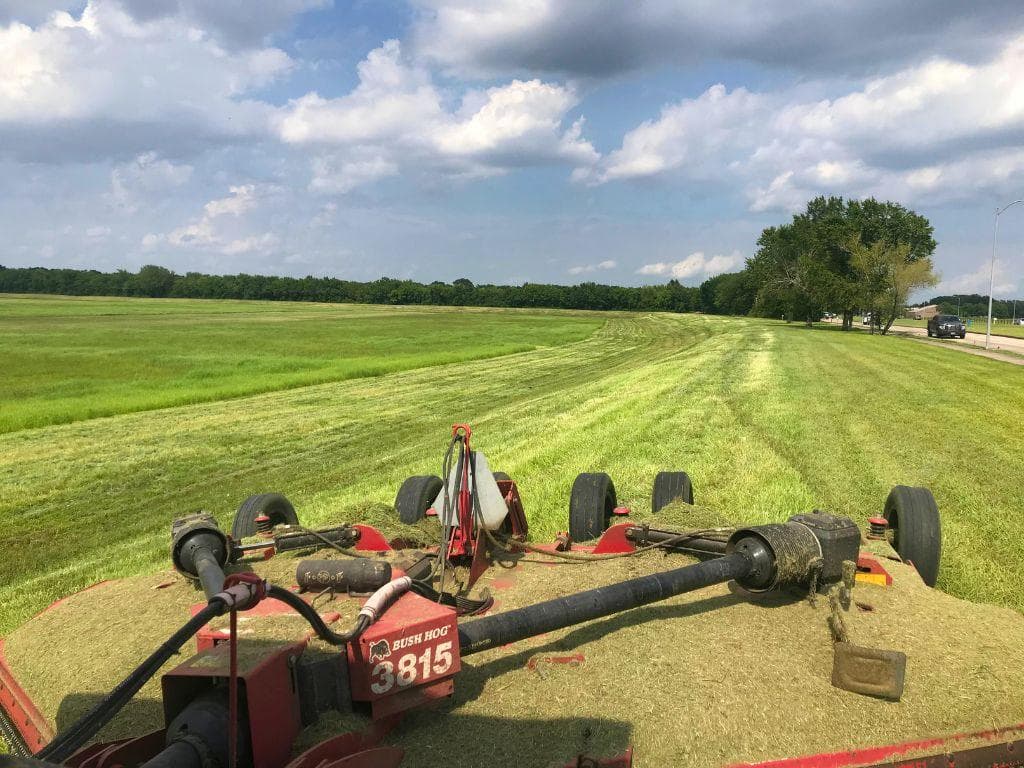
A sustainable lawn can still look clean, trimmed, and professional. The difference is that the work is done with more intention.
A good commercial lawn mowing provider should know when to mow, how much to cut, where to reduce waste, and how to protect the long-term health of the landscape.
For property managers, this creates a better balance. You can maintain curb appeal while also reducing unnecessary fuel use, noise, water waste, and disposal needs.
Questions to Ask Your Commercial Lawn Mowing Provider
If sustainability matters to your property, start by asking better questions. These questions can reveal whether your current provider is simply cutting grass or actually managing your landscape.
Ask your provider:
- Does your crew adjust mowing frequency based on season and grass growth?
- Do you offer grasscycling when appropriate?
- Do you use electric or low-emission equipment?
- How do you prevent over-mowing?
- What mowing height do you recommend for our turf?
- How do your practices support water conservation?
Ready to make your landscape maintenance more sustainable? Contact Stronghold Vegetation Management to learn how our commercial lawn mowing services can support your property goals.
Commercial Lawn Mowing and Sustainability Can Work Together
Commercial lawn mowing and sustainability are not opposing goals.
With the right strategy, your property can stay attractive while reducing waste, emissions, noise, and unnecessary resource use. The key is working with a provider that understands both curb appeal and responsible maintenance.
Sustainable mowing is not about doing less.
It is about doing the right work at the right time.
If your property still relies on the same mowing plan every week of the year, it may be time to take a closer look.
Is your current commercial lawn mowing strategy helping your property look better while supporting your sustainability goals?