Aquatic weeds don’t have to completely disappear to spread. In many cases, a single surviving root, underground stem, or even a small plant fragment can quickly grow into another infestation. That’s why ponds that seem perfectly clear one month may be overrun again the next.
Effective aquatic vegetation control goes beyond removing visible weeds. It also addresses the conditions under which they can return. Read on to learn why aquatic vegetation keeps coming back and how a proactive approach can produce longer-lasting results.
Why Aquatic Weeds Keep Coming Back
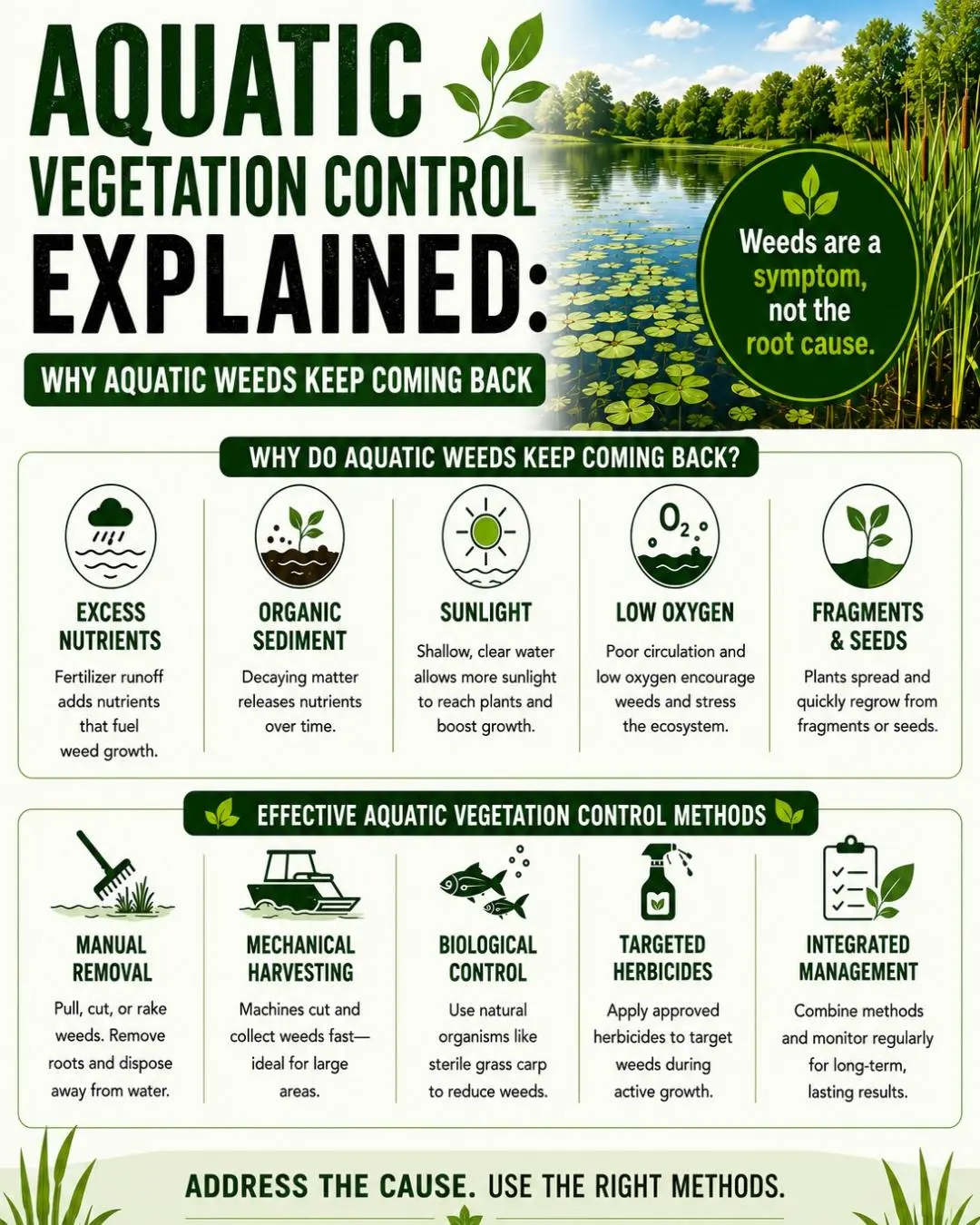
Aquatic weeds are remarkably resilient. Many species have evolved to survive changing water conditions and quickly recover after disturbances.
Some aquatic plants spread through seeds that remain dormant until conditions are favorable. Others reproduce through underground rhizomes, tubers, or small plant fragments. Even a tiny piece left behind during removal can establish a new colony.
Environmental conditions also play a major role. Warm temperatures, abundant sunlight, shallow water, and slow-moving currents create ideal conditions for many invasive and nuisance aquatic plants. Unless these conditions are managed, weeds often return regardless of the removal method used.
The Hidden Causes Behind Recurring Weed Growth
Recurring aquatic weed problems often begin long before new plants appear on the surface. Hidden environmental factors create ideal conditions that allow unwanted vegetation to grow back even after it has been removed.
Excess Nutrients Fuel Growth
Nutrients such as nitrogen and phosphorus naturally exist in aquatic environments, but excessive amounts can dramatically accelerate weed growth. Fertilizer runoff, decomposing leaves, grass clippings, livestock waste, and stormwater all contribute additional nutrients that aquatic plants readily absorb.
According to the U.S. Environmental Protection Agency (EPA), nutrient pollution is one of the nation’s most widespread environmental challenges because excess nitrogen and phosphorus stimulate excessive algae and aquatic plant growth.
Reducing nutrient inputs often has a greater long-term impact than repeatedly removing vegetation alone.
Poor Water Circulation
Still water allows nutrients to settle while creating favorable conditions for aquatic weeds. Sediment gradually accumulates on the bottom, providing additional growing material for rooted vegetation.
Limited water movement may also reduce oxygen levels, making it easier for certain nuisance species to dominate while desirable aquatic ecosystems struggle to thrive.
Common Mistakes That Make the Problem Worse
Even well-intentioned pond maintenance can unintentionally encourage future weed growth. Avoiding these common mistakes can make aquatic vegetation control more effective and help reduce recurring infestations.
- Removing Only the Visible Weeds
Clearing plants from the surface may improve the pond’s appearance temporarily, but roots, rhizomes, and other underground structures often remain. These surviving plant parts can quickly produce new growth. - Waiting Too Long Between Maintenance
Delaying treatment allows aquatic weeds to spread and become more difficult to manage. Regular inspections help detect small infestations before they develop into larger, more costly problems. - Leaving Dead Vegetation in the Water
Dead plants that are left to decompose release nutrients back into the pond. This added organic matter can fuel another cycle of aquatic weed growth and reduce overall water quality. - Ignoring the Underlying Causes
Simply removing weeds without addressing issues like nutrient runoff, sediment buildup, or poor water circulation often results in recurring vegetation. Long-term success requires managing both the plants and the conditions that support their growth.
How to Get Rid of Aquatic Vegetation?
Successful aquatic vegetation control usually combines several management strategies based on the size of the waterbody, the plant species involved, and the overall condition of the ecosystem.
Manual Removal
Manual removal involves hand-pulling, cutting, or raking aquatic vegetation from the water using tools such as weed rakes or cutting blades. To reduce regrowth, it’s important to remove as much of the root system as possible and dispose of the collected vegetation away from the shoreline.
Mechanical Harvesting
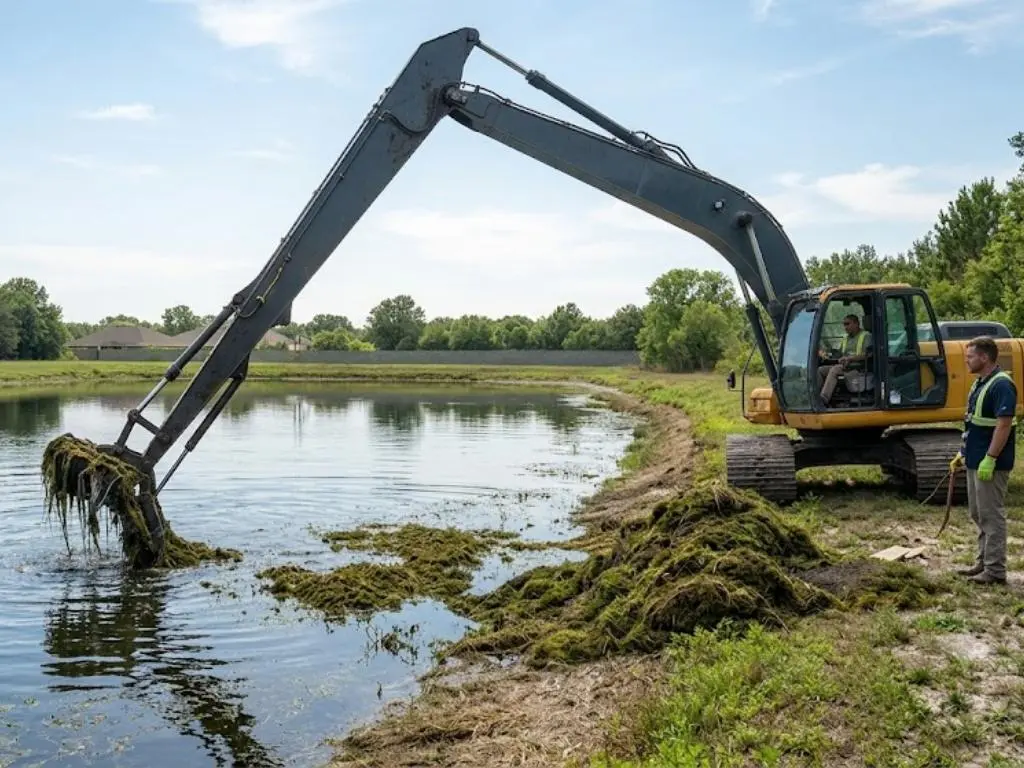
Mechanical harvesting uses specialized equipment to cut aquatic vegetation below the water’s surface while collecting the plant material with an onboard conveyor. The harvested weeds are then transported to shore for disposal, making this method ideal for larger infestations.
Biological Control
Biological control uses natural organisms, such as sterile grass carp, to consume certain submerged aquatic plants over time. Because results depend on the plant species and pond conditions, professional guidance is recommended before introducing biological controls.
Targeted Herbicide Applications
Targeted herbicide applications involve identifying the weed species and applying an approved aquatic herbicide directly to the affected vegetation or water. Treatments are typically performed during active plant growth, and large infestations are often treated in sections to help protect water quality.
Integrated Aquatic Vegetation Control
Integrated aquatic vegetation control combines multiple methods, such as manual removal, harvesting, biological controls, and herbicide applications, into a customized management plan. Regular monitoring and preventive maintenance help reduce future weed growth and support long-term pond health.
Preventing Aquatic Weeds from Returning
Long-term success depends on preventing favorable growing conditions instead of simply reacting to new weed growth. By making a few proactive changes, property owners can reduce the likelihood of recurring infestations and support a healthier aquatic ecosystem.
- Reduce Nutrient Runoff
Limit fertilizer use near ponds, lakes, and other waterways to prevent excess nitrogen and phosphorus from entering the water. Installing vegetative buffer strips along the shoreline can also help filter stormwater before it carries nutrients into the pond. - Inspect Your Pond Regularly
Routine inspections make it easier to identify new weed growth before it spreads. Catching invasive or nuisance plants early often allows for simpler, more cost-effective management. - Improve Water Circulation
Aeration systems increase water movement and help maintain healthier oxygen levels. Better circulation can create less favorable conditions for certain aquatic weeds while supporting overall pond health. - Manage Sediment Buildup
Leaves, grass clippings, and other organic debris gradually accumulate on the pond bottom, creating nutrient-rich sediment where aquatic plants can thrive. Removing excess sediment and preventing debris from entering the water can help slow future weed growth. - Maintain a Long-Term Management Plan
Instead of waiting for weeds to become a problem, establish a regular maintenance schedule that includes monitoring, vegetation removal when needed, and water quality improvements. Consistent management is often the most effective way to keep aquatic vegetation under control.
When Professional Aquatic Vegetation Control Makes Sense
While small weed patches may be manageable with routine maintenance, larger infestations often require professional evaluation. Recurring annual growth, invasive plant species, widespread vegetation, or declining water quality may indicate that the underlying environmental conditions need comprehensive management rather than repeated removal alone.
Professional aquatic vegetation specialists can identify the specific plant species involved, evaluate water conditions, and develop customized treatment plans that balance effective weed management with environmental stewardship.
Stronghold Vegetation Management develops tailored aquatic vegetation control solutions based on each property’s unique conditions. By combining proven management techniques with long-term monitoring and maintenance strategies, the team helps property owners restore healthier ponds, lakes, and waterways while reducing recurring weed problems.
Wrapping Up
Recurring aquatic weeds are often a sign of underlying conditions that need attention, not just vegetation that needs removal. Lasting aquatic vegetation control comes from addressing the root causes through proactive management rather than relying on temporary fixes.
If aquatic weeds continue to return year after year, Stronghold Vegetation Management can help identify the cause and develop a customized aquatic vegetation control plan for your pond or lake. Contact our team today to schedule a consultation and take the first step toward healthier, more manageable waterways.