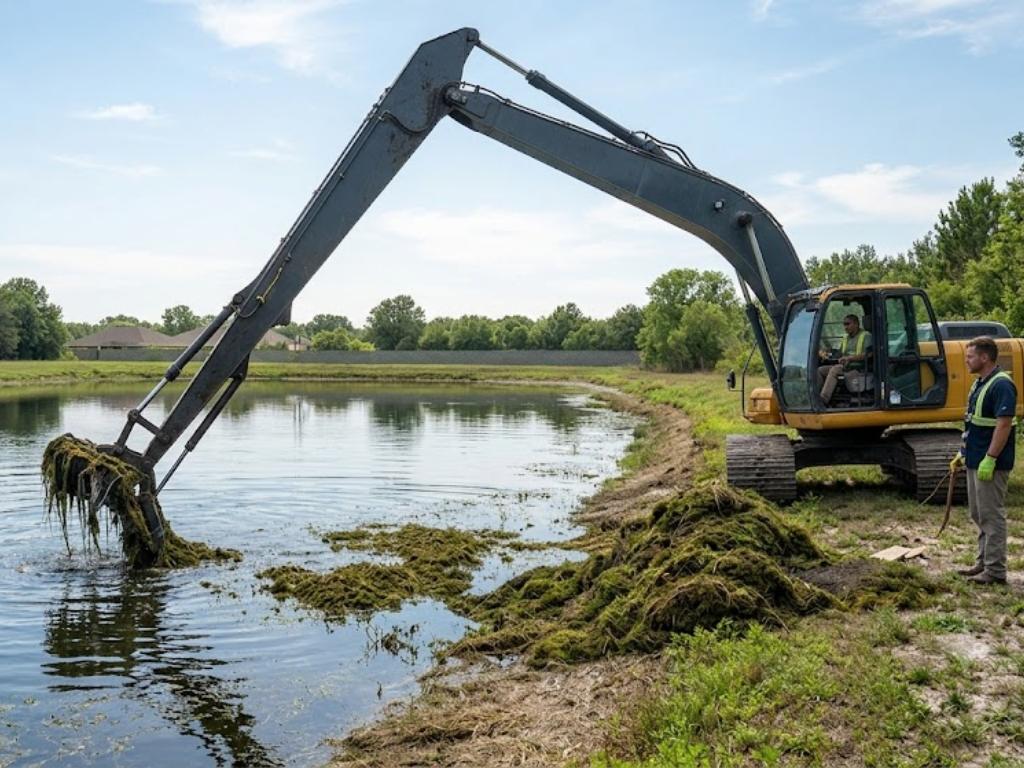
Forestry mulching provides a faster and less disruptive way to clear land without the heavy damage often associated with bulldozing or burning. Still, one important question remains:
What is the best time of the year for forestry mulching?
The answer depends on your property conditions, goals, and local climate. Some seasons improve equipment access. Others help reduce vegetation regrowth or lower soil disturbance.
Understanding how seasonal timing affects forestry mulching can help you get better results while protecting your property investment.
What is Forestry Mulching?
Forestry mulching is a land clearing method that uses specialized machinery to cut, grind, and clear vegetation directly on-site. Trees, brush, saplings, and invasive plants are processed into mulch instead of being piled, burned, or hauled away.
Unlike traditional land clearing, forestry mulching leaves a protective layer of organic material across the soil surface. This helps reduce erosion while improving moisture retention and soil stability.
Forestry mulching is commonly used for:
- Lot clearing
- Fence line maintenance
- Hunting land management
- Trail creation
- Pasture restoration
- Wildfire prevention
- Utility corridor clearing
Many property owners prefer forestry mulching because it is more efficient and less invasive than traditional clearing methods.
The process also eliminates several extra steps often required with bulldozing, such as debris hauling, burning permits, and extensive cleanup.
What is the Purpose of Mulching?
Mulching serves several important purposes beyond simply clearing vegetation.
One of the biggest advantages is erosion control. The mulch layer protects exposed soil from heavy rainfall and wind, helping reduce runoff and soil displacement after clearing.
Mulching also helps:
- Retain soil moisture
- Reduce weed growth
- Improve soil health over time
- Minimize ground disturbance
- Return organic nutrients to the soil
This becomes especially important on sloped properties or areas vulnerable to erosion.
According to the USDA Natural Resources Conservation Service, maintaining ground cover plays a major role in reducing soil erosion and protecting long-term land quality.
Another benefit is wildfire prevention.
Dense vegetation and dead brush create fuel for wildfires. Forestry mulching reduces excess vegetation while creating defensible space around properties, roads, and structures.
The U.S. Forest Service continues to recommend vegetation management and fuel reduction as part of wildfire mitigation efforts in high-risk areas.
For hunting properties, mulching can improve wildlife movement, increase visibility, and create easier access to food plots and trails.
The purpose of forestry mulching ultimately depends on the property owner’s goals, but in nearly every case, the process improves land usability and long-term maintenance.
Why Seasonal Timing Matters for Forestry Mulching
Forestry mulching can technically happen year-round in many regions. However, weather and ground conditions directly affect the efficiency and effectiveness of the project.
Several seasonal factors influence results, including:
- Soil moisture
- Ground accessibility
- Vegetation growth cycles
- Weather patterns
- Wildlife activity
- Fire risks
For example, wet conditions may slow equipment down and increase soil rutting. Dry conditions may improve access but increase dust and wildfire concerns.
Timing also affects how quickly unwanted vegetation grows back after clearing.
Choosing the right season helps contractors work more efficiently while protecting the property from unnecessary damage.
What’s the Best Time of the Year for Forestry Mulching?
The best time for forestry mulching depends on your goals and regional climate. Each season offers unique advantages and challenges.
Spring Forestry Mulching
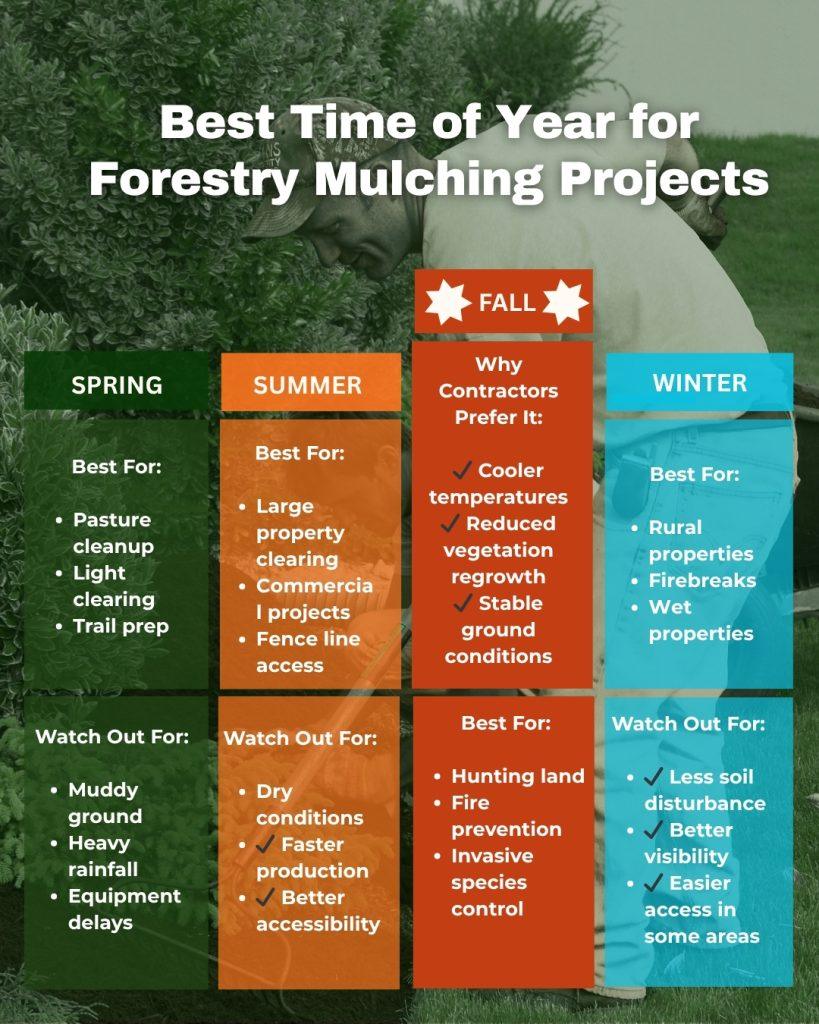
Spring is a popular time for forestry mulching because many property owners begin preparing land for summer use and outdoor projects.
During spring, dead vegetation from winter becomes easier to identify and remove. Warmer temperatures also encourage faster grass recovery after clearing.
Spring forestry mulching works well for:
- Residential lot clearing
- Pasture cleanup
- Trail maintenance
- Light vegetation management
However, spring rain can create challenges.
According to Iowa State University’s Integrated Crop Management, spring is one of the wettest seasons in many parts of the United States. Saturated ground conditions may reduce equipment access and increase erosion risks.
Property owners planning spring projects should pay close attention to drainage conditions and local weather patterns.
Summer Forestry Mulching
Summer often provides the fastest and most efficient working conditions for forestry mulching projects.
Dry ground improves equipment mobility while reducing the chance of deep tire ruts. Longer daylight hours also help crews complete larger projects more quickly.
Summer is ideal for:
- Large acreage clearing
- Commercial site preparation
- Fence line clearing
- Access road development
- Overgrown property restoration
Many contractors experience peak demand during the summer because of these favorable conditions.
Still, summer conditions come with potential drawbacks.
Extreme heat can place stress on operators and equipment. Dry vegetation may also increase wildfire risks in certain regions.
Fall Forestry Mulching
Many contractors consider fall the best overall season for forestry mulching.
Cooler temperatures, lower humidity, and thinner vegetation create ideal working conditions. Ground conditions also tend to remain more stable compared to spring.
One major advantage of fall forestry mulching is reduced regrowth.
As vegetation enters dormancy, aggressive brush and invasive plants grow back more slowly after clearing. This helps property owners maintain results longer.
Fall forestry mulching is especially useful for:
- Hunting property preparation
- Trail systems
- Invasive species control
- Wildfire fuel reduction
- Access road clearing
Hunters often schedule forestry mulching projects before deer season to improve property access and wildlife movement.
Because fall conditions are highly favorable, contractor schedules often fill quickly during this time of year.
Winter Forestry Mulching
Winter may not seem like an obvious choice, but it can be highly effective in certain climates.
Dormant vegetation improves visibility, making it easier to identify problem areas and unwanted growth. In colder regions, frozen ground may also reduce soil disturbance and improve machine access on wet properties.
Winter forestry mulching works well for:
- Utility corridor clearing
- Large rural properties
- Firebreak creation
- Right-of-way maintenance
- Vegetation management projects
The U.S. Fish & Wildlife Service also notes that seasonal planning helps minimize impacts on wildlife habitats and nesting activity during vegetation management work.
Of course, heavy snow and severe freezing conditions may limit winter operations in some areas.
Choosing the Right Time for Your Property
The best season for forestry mulching depends on how you plan to use the property after clearing.
If your goal is wildfire prevention, late fall and winter often provide ideal conditions. If you are preparing land for construction, summer and early fall may offer faster project completion and better site access.
For hunting land improvements, late summer and fall usually work best before hunting season begins.
Before scheduling a project, consider:
- The type of vegetation being removed
- Property drainage conditions
- Future land use plans
- Seasonal weather patterns
- Environmental restrictions in your area
Careful planning helps improve project efficiency while protecting the long-term condition of your property.
Conclusion
The best time of the year for forestry mulching depends on your property goals, ground conditions, and local climate. While summer and fall often provide the best working conditions, every season offers unique advantages for land clearing and vegetation management.
Planning your project around the right conditions can improve efficiency, reduce long-term maintenance, and protect your property from unnecessary damage.
If you are ready to reclaim overgrown land, improve property access, or reduce wildfire risks, contact Stronghold Vegetation Management today to schedule a forestry mulching consultation.