
Clearing an open, level property can be relatively straightforward. Add steep slopes, rocky ground, thick vegetation, wet soil, or limited access, however, and the project quickly becomes more complicated.
These conditions can influence which equipment can safely operate, how vegetation is removed, where debris goes, and how exposed soil is managed afterward. For commercial properties, they can also affect the schedule for grading, utilities, roads, and construction.
That is why commercial land clearing on difficult terrain starts with a thorough site assessment. Contractors must evaluate ground conditions, access, vegetation, and the property’s intended use before determining the safest and most efficient clearing approach.
What Makes a Commercial Land Clearing Site Difficult?
Acreage is only one factor in determining the complexity of a clearing project. Two properties of the same size can require completely different approaches.
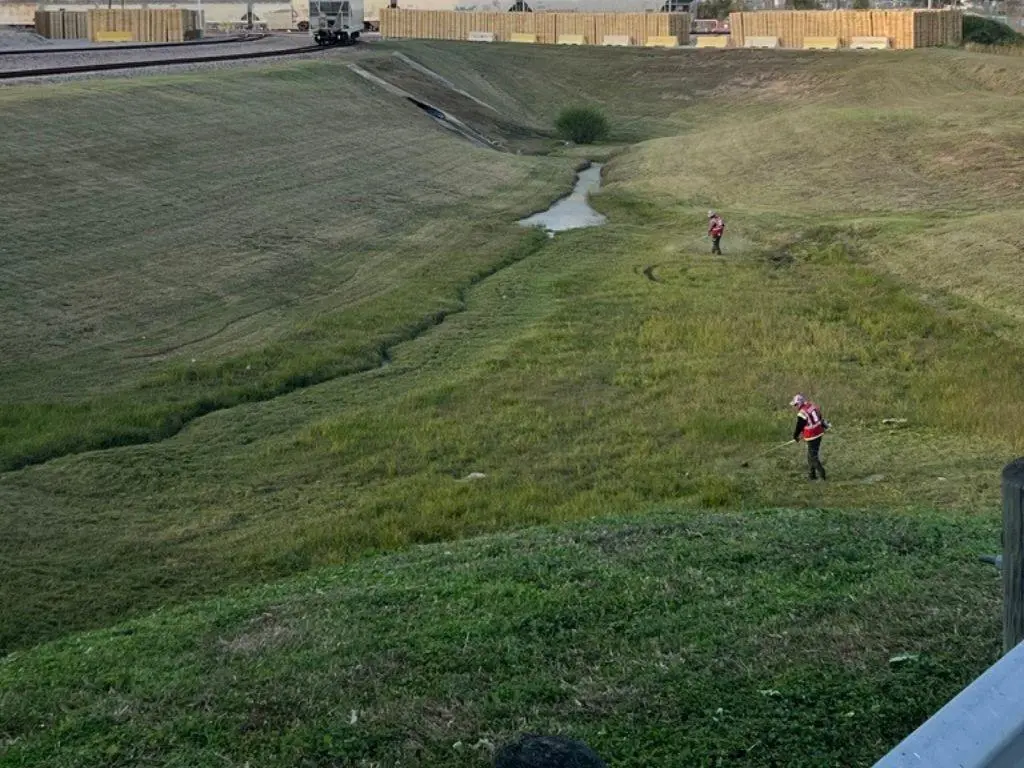
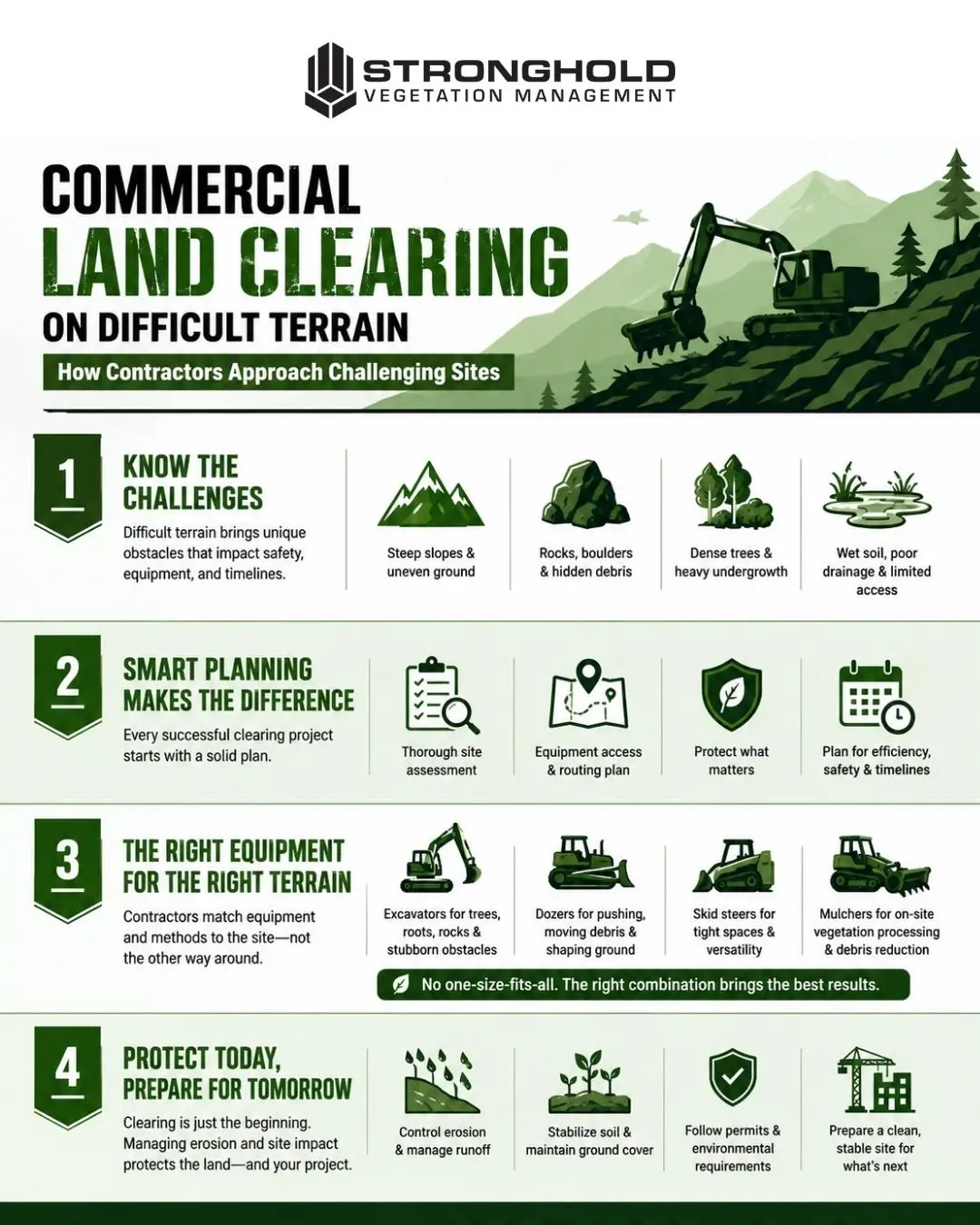
Steep slopes, for example, can limit equipment maneuverability and increase concerns about soil movement. Rocky terrain may contain surface boulders or buried rock that interferes with excavation and grading. Dense vegetation can involve everything from tangled brush to mature trees with extensive root systems.
Wet or poorly drained ground presents another challenge. Heavy equipment operating on soft soil may create deep ruts or compaction, while persistent moisture can influence when work can be performed.
Access matters as well. Narrow entrances, existing buildings, fences, utilities, and neighboring properties can determine which machines can reach the work area and how materials move around the site.
Why Site Assessment Comes Before Heavy Equipment
Effective commercial land clearing begins before a machine starts removing vegetation.
Contractors typically evaluate topography, vegetation, soil conditions, drainage, rock, and equipment access. They also need to understand which areas are designated for clearing and which should remain undisturbed.
Property boundaries, known utilities, easements, waterways, and other site features may influence the plan. Establishing these constraints early helps contractors determine where equipment can travel and where debris can be processed or staged.
This planning can also reduce unnecessary movement across the property. Instead of reacting to obstacles as they appear, crews have a clearer idea of how work should progress.
How Contractors Match Equipment to the Terrain
There is no single machine suited to every challenging property.
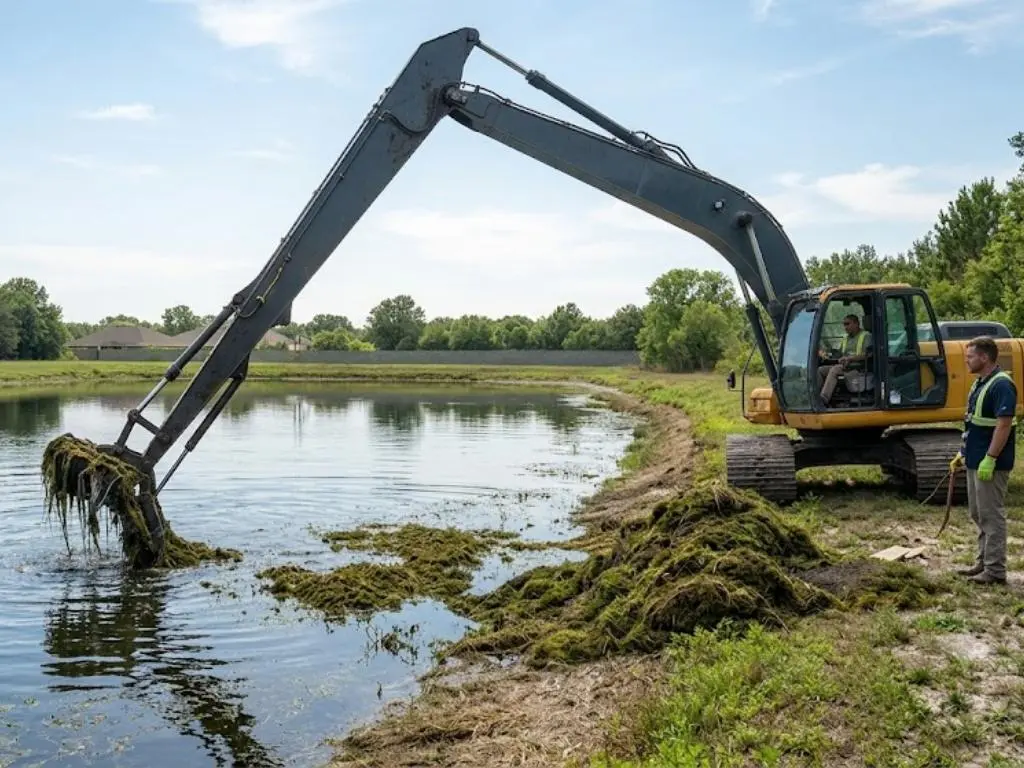
Excavators can handle trees, stumps, roots, rocks, and other substantial obstacles while providing controlled digging and material handling. Bulldozers can move significant quantities of vegetation, debris, and soil when site conditions allow.
Skid steers and compact track loaders offer maneuverability in tighter work areas and can use different attachments for specialized tasks.
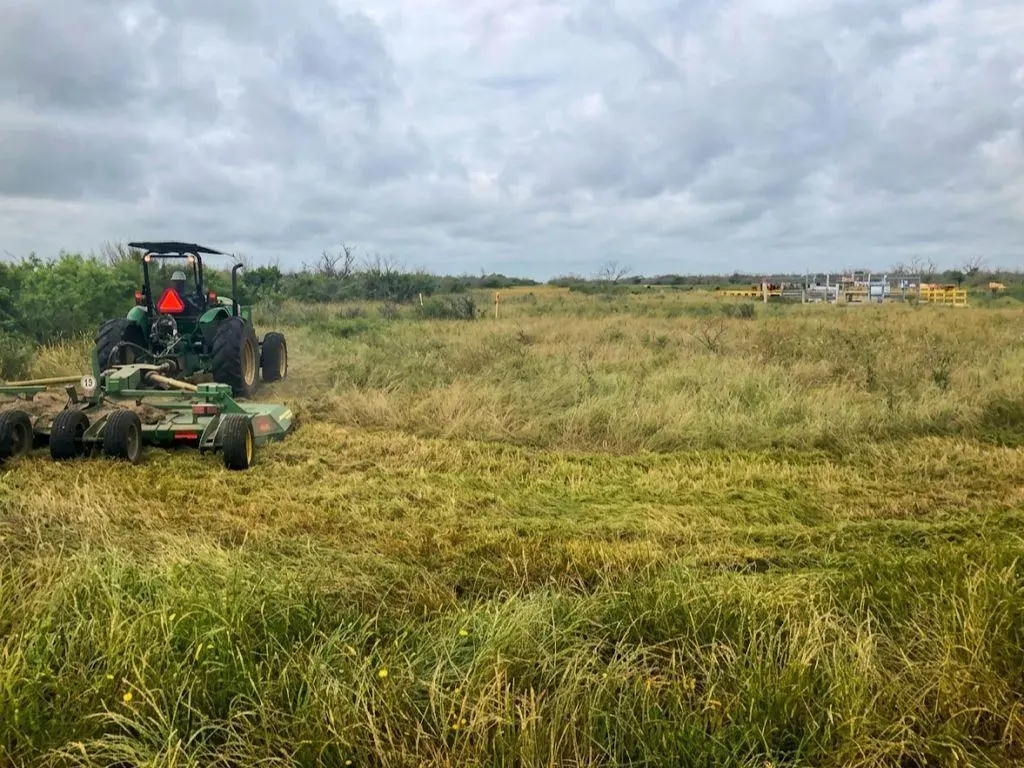
Forestry mulchers provide another option for certain types of vegetation. These machines process trees and brush on-site, potentially reducing the volume of material that needs to be transported elsewhere.
However, forestry mulching is not appropriate for every project. A construction site requiring complete stump removal, excavation, or substantial earthwork may require multiple types of equipment.
What Is the Most Efficient Way to Clear Land?
On difficult terrain, efficient clearing often requires combining methods rather than relying on a single machine or technique. Contractors may use cutting or mulching for vegetation, excavation for large stumps or rocks, and mechanical clearing where site conditions allow.
Work sequencing is equally important. Crews may first establish access and work zones, then clear obstructive vegetation, address larger trees and stumps, process debris, and prepare disturbed areas for subsequent site work.
For commercial land clearing, efficiency does not simply mean clearing as quickly as possible. It means matching equipment and methods to the terrain, minimizing unnecessary material handling, and leaving the property appropriately prepared for the next phase of development.
Why Erosion Matters on Challenging Terrain
Removing vegetation exposes soil that was previously protected from rainfall and runoff. This can become particularly important on sloped properties.
The U.S. Environmental Protection Agency reports that sediment runoff rates from construction sites can be 10 to 20 times greater than agricultural lands and 1,000 to 2,000 times greater than forested lands.
Contractors may use phased clearing, preserve vegetation outside necessary work areas, manage runoff, stabilize exposed soil, and implement appropriate erosion and sediment controls based on project requirements.
Research from the U.S. Department of Agriculture also illustrates the importance of ground cover. In research involving steep rangeland slopes, sediment yield was 3.5 times greater on low-cover plots than high-cover plots, while plots with slash produced substantially less sediment than those without it.
Although individual commercial sites differ, the findings demonstrate why vegetation and ground cover deserve consideration when planning work on steep terrain.
Permits and Environmental Requirements
Clearing plans should also account for applicable local, state, and federal requirements.
For example, the EPA states that Clean Water Act stormwater permitting generally applies to construction activity disturbing one acre or more, as well as smaller sites that are part of a larger common development plan disturbing at least one acre. Clearing, grading, and excavation can qualify as construction activity.
Requirements vary by project and jurisdiction, making early coordination among owners, contractors, engineers, and other professionals important.
Difficult Terrain Requires a Site-Specific Approach
Steep slopes, rocks, dense vegetation, wet ground, and restricted access can make commercial land clearing considerably more complex. The right response is not necessarily bigger equipment or faster clearing. It is a strategy built around the actual conditions of the property.
Careful assessment, appropriate equipment, efficient sequencing, and attention to erosion can help prepare challenging land for the next stage of development.
Before choosing a clearing method, consider having the property evaluated by an experienced commercial land clearing contractor. Understanding the terrain first can make it easier to determine what the project actually requires.
Prepare Challenging Sites With Stronghold Vegetation Management
Challenging terrain requires the right equipment, planning, and clearing strategy. Stronghold Vegetation Management provides commercial land clearing for properties with dense vegetation, uneven terrain, restricted access, and other demanding site conditions.
Preparing land for construction, infrastructure, or commercial development? Contact Stronghold Vegetation Management to discuss your site and determine the right clearing approach for your property.