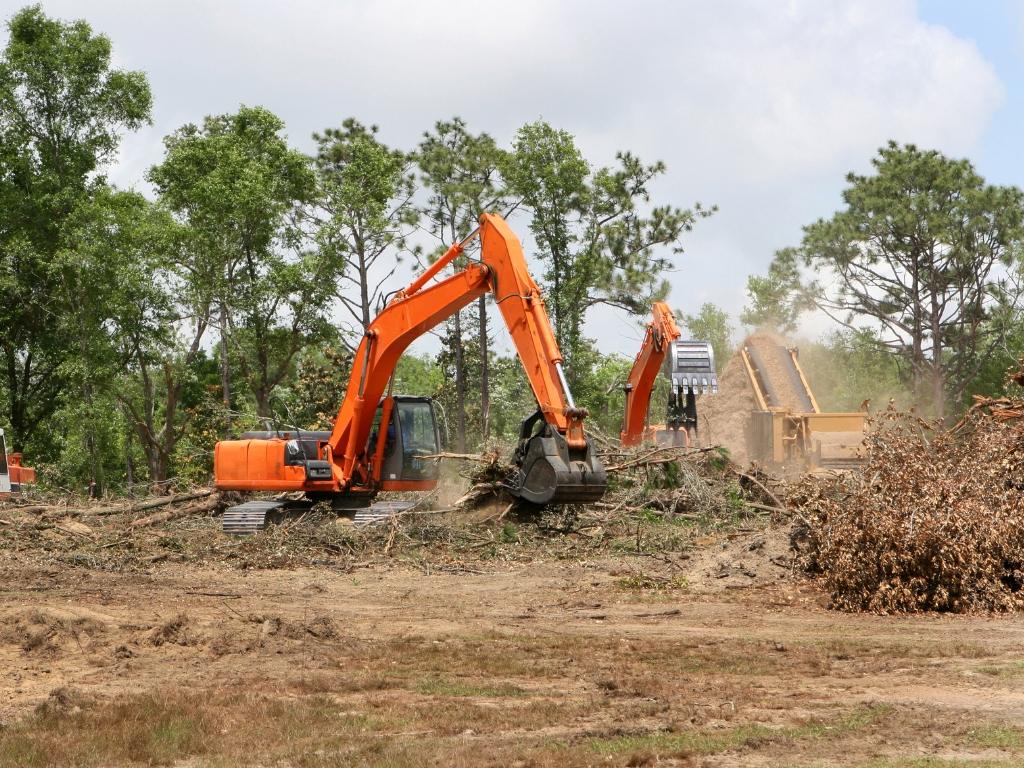
When you think of commercial land clearing services, it’s easy to picture machines removing trees and brush. But the real challenge lies in the risks — wildlife, contamination and stormwater controls — that can affect timelines, costs, and compliance.
If you’re responsible for a development project, overlooking these risks could mean delays, fines, or unexpected expenses. But here’s the good news. With the right planning and a contractor who knows what to watch out for, you can keep your project moving smoothly.
Why Risk Management Should Be Part of Every Clearing Project
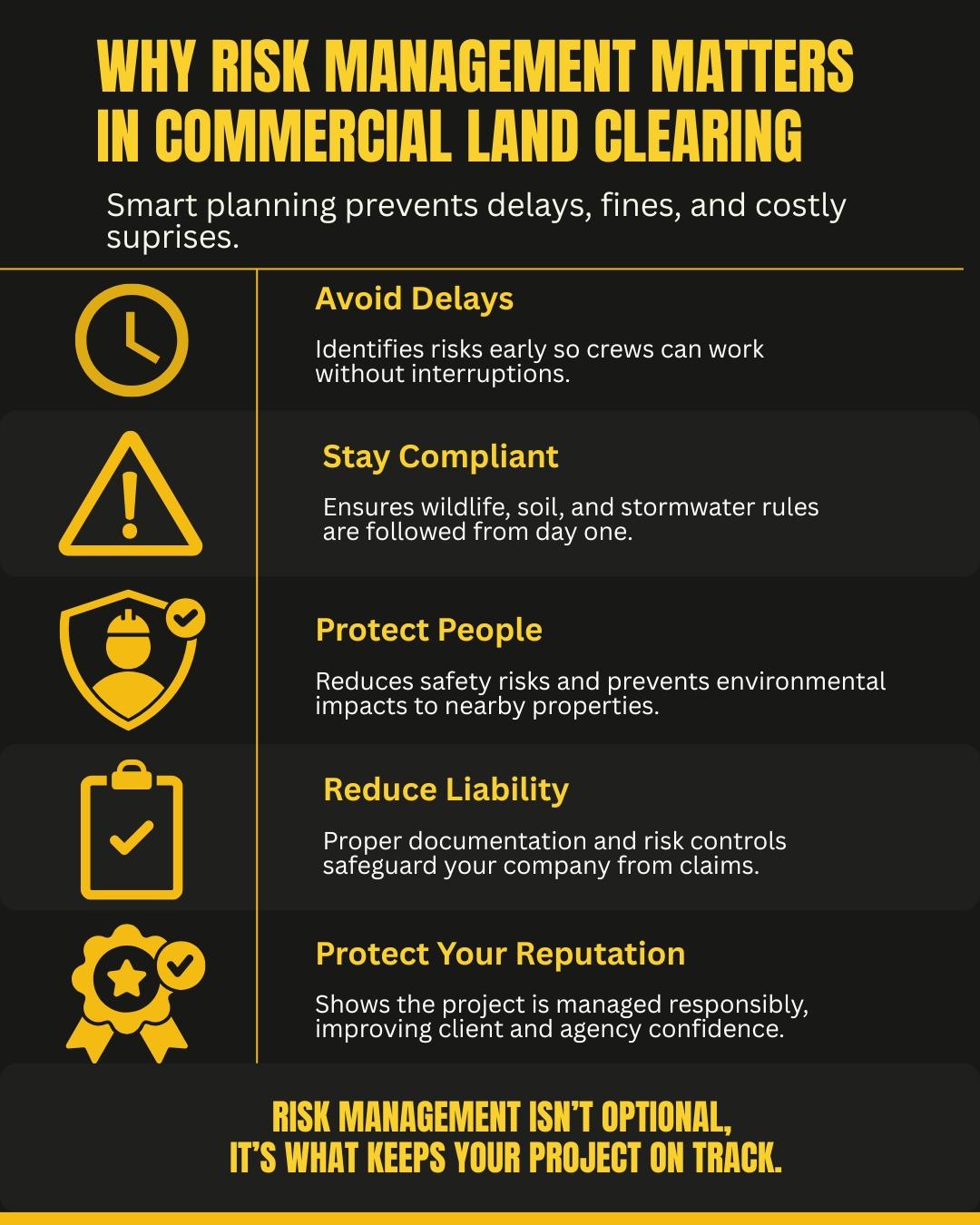
Every site is different. Some properties sit on old farmland, others near wetlands, and many come with hidden challenges like underground tanks or protected species. That’s why risk management is essential.
Here’s what it does for you:
- Keeps projects on schedule
- Reduces the chance of fines or penalties
- Protects your company’s reputation
- Prevents safety issues for workers and surrounding communities
Before a single tree is removed, you should be asking: What risks could this site hold, and how will we deal with them?
Managing Wildlife on Clearing Sites
Wildlife laws don’t stop at the property line. Even if you own the land, clearing without considering the animals living there can lead to legal trouble.
For example, nesting birds, amphibians, or small mammals may be protected by state or federal rules. Clearing during the wrong season could result in fines, or worse, a stop-work order.
So how do professionals handle this?
- They run site surveys to check for protected species.
- They schedule clearing around nesting or migration seasons.
- They set up buffer zones to protect habitats.
- If relocation is necessary, they coordinate with wildlife agencies.
It’s simple: addressing wildlife early helps you avoid costly delays later.
Dealing With Contamination Risks
Not all land is as clean as it looks. Properties that once housed industrial buildings, gas stations, or even farms may have contaminated soil. Petroleum, pesticides, or heavy metals can all create major problems if disturbed.
Contamination matters because agencies may require cleanup before you build, crews could face exposure to unsafe materials, and hazardous waste disposal can pause your project if it isn’t planned in advance.
Here’s what professionals do differently:
- They arrange environmental assessments to test soil.
- They identify potential hazards before equipment starts digging.
- They follow proper disposal rules to avoid spreading contamination.
Skipping this step might feel like saving time, but discovering pollution mid-project is far more expensive and disruptive.
Keeping Stormwater Under Control
Soil erosion and runoff are big concerns once vegetation is cleared. Without controls in place, sediment and pollutants can wash into nearby waterways. That’s a fast track to fines and community complaints.
The best stormwater management practices include:
- Installing silt fences to trap sediment.
- Creating sediment basins to collect runoff.
- Using erosion mats or seeding to stabilize bare soil.
- Inspecting stormwater systems regularly, especially after heavy rain.
Ask yourself: if a storm hit right after clearing, would your site be prepared? If not, it’s time to put these protections in place before work starts.
Steps You Can Take to Minimize Risks
Hiring a contractor for commercial land clearing services isn’t just about getting trees out of the way. It’s about choosing a team that knows how to protect your timeline and your budget by managing risks the right way.
A reliable contractor will:
- Conduct a pre-clearing assessment to flag issues with wildlife, contamination, or stormwater before work starts. This step helps you know what you’re dealing with upfront.
- Work directly with agencies to handle permits and compliance, saving you from the stress of navigating regulations on your own.
- Provide clear documentation so you have proof of compliance if questions come up later. This can be crucial during inspections.
- Adapt to unexpected findings such as buried debris, contaminated soil, or nesting wildlife without halting the entire project.
- Rely on trained crews who understand environmental and safety requirements, which reduces liability for you as the property owner.
When these steps are built into the process, projects move forward with fewer interruptions, less red tape, and a lot less stress.
Why Professional Risk Management Pays Off
Choosing an experienced land clearing contractor isn’t just about getting the work done quickly. It’s about reducing risks that can derail your project. When you work with the right team, you benefit from:
- Fewer project delays
- Better compliance with regulations
- More predictable costs
- A smoother handoff from clearing to construction
Stronghold Vegetation Management focuses on commercial land clearing services that balance efficiency with compliance. That balance helps protect your investment and ensures the land is ready for whatever comes next.
Wrapping Up
Wildlife protection, contamination, and stormwater aren’t just boxes to check; they’re core parts of any successful clearing project. Addressing these risks upfront saves money, time, and stress later.
So here’s the question: have you built risk management into your land clearing plan? If not, now’s the time to start.