Aquatic weeds can threaten both natural resources and recreational activities by impeding water flow, depleting oxygen, and overtaking aquatic species.
Controlling aquatic weeds during the off-season is essential to avoid larger infestations and maintain a healthy aquatic environment.
By taking preventive measures now, you can reduce the growth of many aquatic weeds and ensure the safety of your waterbody year-round.
Aquatic Weeds and Invasive Species
Aquatic weeds, such as pond weed, submersed weeds, and floating plants, can disrupt the balance of aquatic ecosystems. Invasive species like water hyacinth and water primrose are particularly problematic.
These weeds grow rapidly, choking out other aquatic plants and reducing dissolved oxygen, leading to potential fish kills and muddy water.
Rooted aquatic weeds, floating weeds, and emergent weeds can also have a detrimental effect on the natural flow of water, making aquatic weed control crucial.
Off-Season Management
The off-season is a critical time to address aquatic weed problems. Many aquatic weeds enter dormancy, making it easier to control their spread before they flourish.
This period is ideal for applying aquatic herbicides, conducting physical removal, and implementing biological control strategies like the introduction of triploid grass carp.
Managing aquatic weed growth now ensures that pond weeds, filamentous algae, and emergent plants don’t take over once warmer weather arrives.
Early Identification and Monitoring
Off-season monitoring is crucial for identifying submersed weeds, floating vegetation, and algae blooms before they escalate into major infestations.
Using tools like floating weed rakes and underwater cameras can help spot target weeds in shallow areas early.
Detecting pond weed and submersed aquatic weeds at this stage allows for timely action through herbicides, biological control, or physical removal.
Additionally, regular water quality testing and dissolved oxygen monitoring are essential to prevent fish kills and oxygen depletion, both of which are common during severe weed infestations.
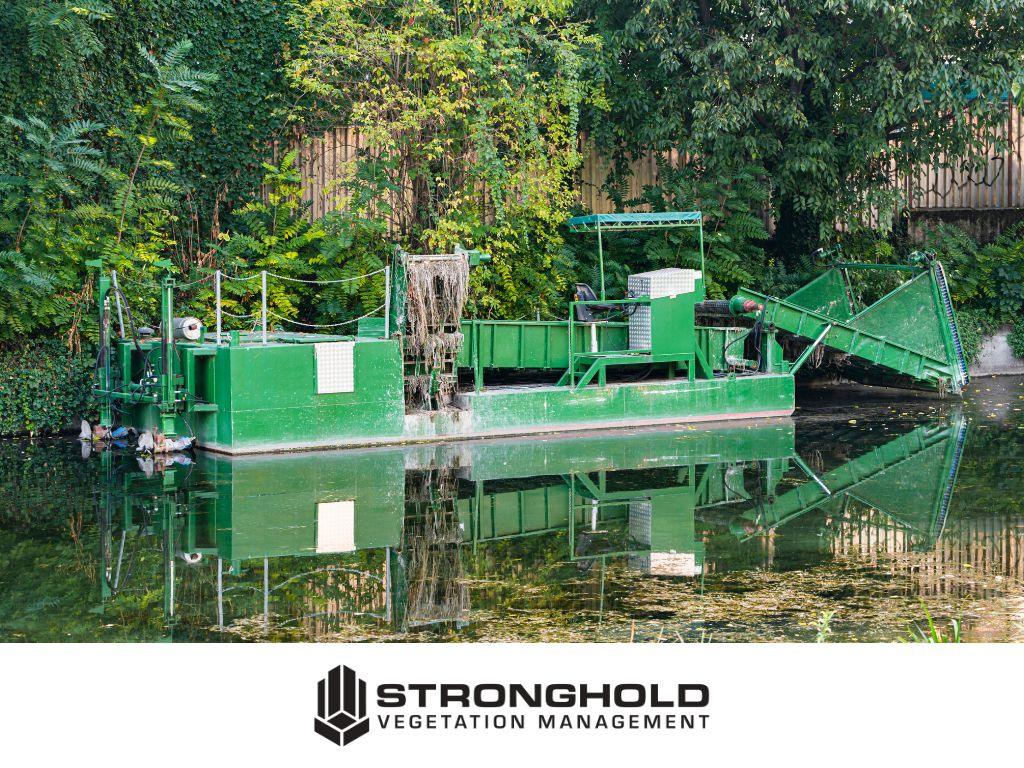
Manual Removal for Small Waterways
For small or farm ponds, manual removal of aquatic weeds can be an effective control method. Manual methods are particularly effective for water bodies used for livestock watering or recreational activities, like fishing, where chemical treatments may be less desirable.
Submersed vegetation, such as rooted aquatic plants, can be cleared using specialized tools like aquatic weed cutters or rakes.
This approach is especially useful in shallow water areas where emergent plants or floating weeds have become established.
Proper disposal of plant waste is essential to prevent regrowth from leftover plant material in the water.
Chemical Control
Contact herbicides and systemic herbicides are available in both liquid and granular forms to treat specific weed species.
Copper sulfate, a common algae control treatment, can be applied to reduce algae blooms and control algae in farm ponds and existing ponds.
It’s crucial to follow the herbicide label for waiting periods and water treated, as improper application can harm aquatic organisms and other aquatic plants.
Most herbicides are safe when applied correctly, but using them during the dormant season reduces their detrimental effect on aquatic species.
Biological Control Methods
Biological control, such as introducing triploid grass carp, is an environmentally friendly way to manage aquatic weed problems.
These fish feed on submersed weeds and other aquatic plants, preventing weed growth and promoting water flow. However, biological control often requires more than one treatment to be effective.
Grass carp are particularly useful in shallow water areas where submersed vegetation and floating plants tend to thrive.
Their role in preventing weed infestations helps maintain water quality and reduce the need for chemical treatments.
Long-Term Prevention Strategies
After controlling weeds during the off-season, long-term prevention becomes essential. Implementing control methods like aeration, sediment removal, and aquatic vegetation management helps prevent future weed growth.
Reducing nutrient runoff from food crops and managing farm ponds effectively helps control weeds and algae blooms in larger waterbodies.
Preventive control measures like these, along with regular monitoring of aquatic weed growth and dissolved oxygen levels, can help keep aquatic weed problems in check.
Additionally, community education on aquatic weed control and algae control can also prevent new weed species from entering your waterbody.
Wrapping Up
Effective control of aquatic weeds during the off-season is crucial for maintaining a healthy aquatic environment. By using a combination of herbicides, biological control, and manual removal, you can keep invasive species at bay and prevent future infestations.
Taking action early in the year ensures cleaner water, healthier aquatic organisms, and fewer weed infestations once the warmer months arrive.
Ensure your waterbody stays healthy and free from invasive species year-round. Contact Stronghold Vegetation Management today for expert aquatic weed control solutions!