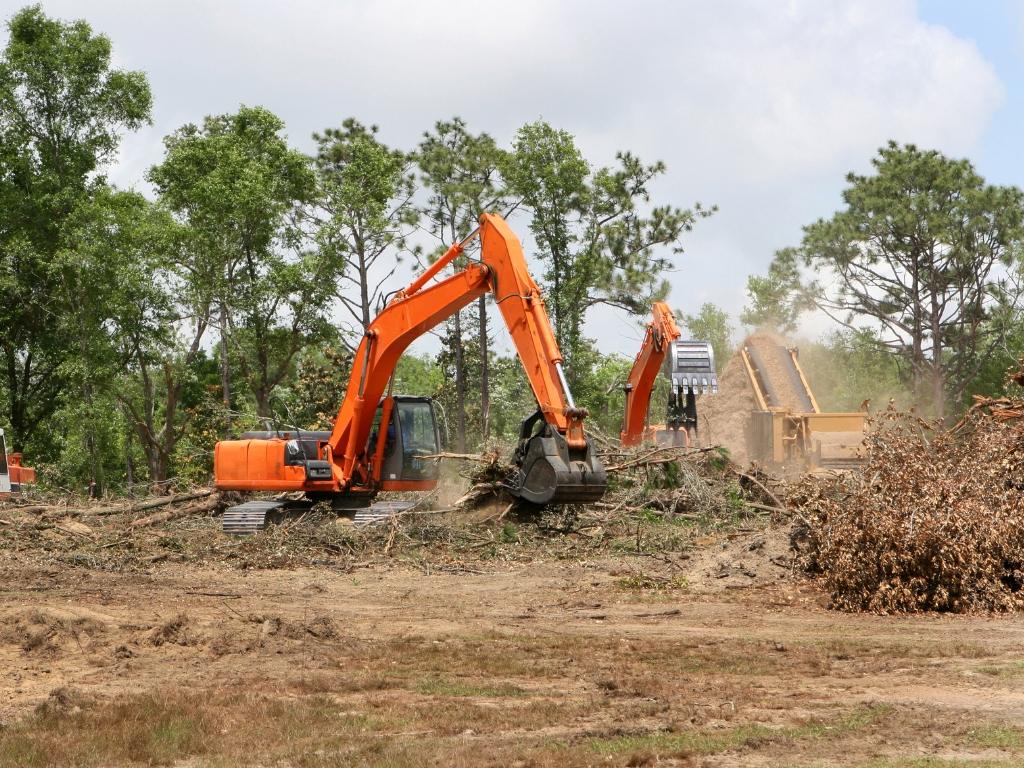
Brush rarely becomes a problem overnight. It builds quietly. A few weeds along a fence line turn into thick growth you avoid walking through. A drainage area becomes hard to inspect. An unused section of land becomes something you “deal with later.”
By the time most property owners start looking into brush management, the issue has already gone beyond cosmetic. Access is limited. Fire risk has increased. Maintenance costs are rising instead of shrinking.
This guide is meant to help you understand brush management the way professionals do. Not just what it is, but why it matters, how problems develop, and how to make decisions that actually hold up over time.
What is Brush Management?
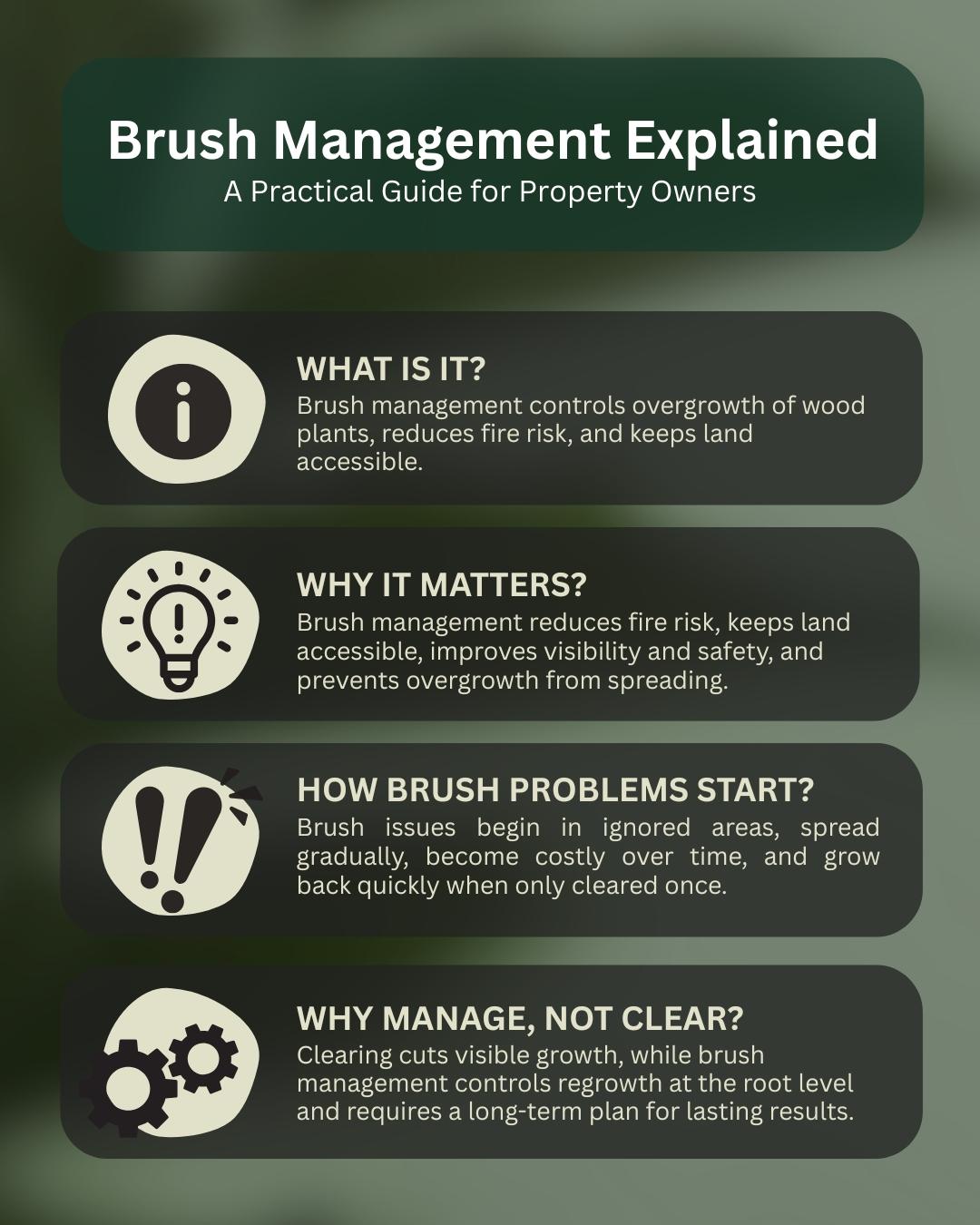
Brush management is the process of controlling unwanted vegetation such as shrubs, woody plants, invasive species, and dense weeds to keep land safe, accessible, and usable. It focuses on reducing overgrowth that standard mowing can’t handle, including:
- Property edges
- Fence lines
- Slopes and drainage areas
- Vacant lots
- Utility corridors
- Fire-prone zones
Brush management matters because unmanaged growth doesn’t stay where it starts. Vines climb fences. Saplings establish themselves along access roads. Thick brush creeps into areas that were once usable or visible.
Why Property Owners Invest in Brush Management
Most property owners don’t think about brush until it interferes with something: a blocked access road, a fence line you can’t see, or a fire risk creeping closer to buildings. Brush management helps prevent those issues before they escalate.
- Reduced fire fuel on the ground: Managing brush limits dry, overgrown vegetation that can quickly spread fire and increase risk near structures and access areas.
- Clear sightlines along roads and entrances: Controlling brush improves visibility, making entrances, driveways, and roadways safer to use and easier to navigate.
- Better access for maintenance and inspections: Removing dense growth allows you to reach key areas of your property without obstruction, saving time during routine maintenance and inspections.
- Healthier native plant growth: Reducing invasive and aggressive brush gives native plants space and resources to grow without being crowded out.
- Long-term land usability: Consistent brush management prevents overgrowth from limiting how your land can be accessed, maintained, or used in the future.
How Brush Problems Actually Develop
Brush issues usually begin in overlooked areas. Fence lines, slopes, drainage channels, and unused portions of land receive less attention, which makes them ideal starting points for aggressive growth.
These areas often have the right mix of moisture, sunlight, and disturbed soil. Plants take hold quietly. Roots deepen. Growth spreads outward.
By the time brush becomes noticeable, it’s often already affecting access or safety. Clearing at that stage feels reactive rather than preventative.
This is where many property owners get frustrated. They clear an area, only to see it grow back thicker within months. That isn’t bad luck. It’s a sign that brush management was treated as a one-time task instead of an ongoing strategy.
Brush Management vs. Basic Clearing
Basic clearing cuts vegetation at the surface. Many brush species respond by resprouting from the roots or spreading through seed activation after soil disturbance. Without follow-up control, cleared areas often become harder to manage over time.
Brush management looks at how vegetation behaves. It considers growth patterns, root systems, and how different plants respond to removal. That understanding determines whether cutting, mulching, treatment, or a combination of methods makes sense.
If your goal is long-term control, clearing alone rarely delivers it.
Year-Round Brush Management Plan
Brush growth follows predictable seasonal patterns, even if it feels unpredictable when you’re dealing with it on your property. When brush is managed consistently throughout the year, maintenance becomes more manageable and long-term costs stay lower.
Spring
- Early growth control: Spring triggers rapid new growth, especially in overlooked areas like fence lines and drainage zones, and addressing brush early prevents young plants from maturing and spreading deeper root systems.
- Light mechanical clearing: Removing thin, fast-growing brush at this stage limits how much heavy equipment or follow-up work will be needed during peak growth months.
- Invasive species identification: Spring growth makes invasive plants easier to spot, allowing you to remove them before they spread across larger areas of the property. You can check this list if you suspect you have them on your property.
- Problem area mapping: Identifying where brush returns first helps prioritize future maintenance and prevents repeated issues in the same locations.
Summer
- Regrowth monitoring: Summer is when brush rebounds fastest, particularly in shaded or irrigated areas, and regular monitoring allows you to focus on problem spots instead of re-clearing entire sections.
- Selective treatment: Targeted removal or spot treatments control aggressive plants while minimizing disruption to areas that are already under control.
- Fire risk reduction: In dry conditions, unmanaged brush becomes fuel, and managing growth in summer helps reduce safety risks around structures and access routes.
- Access maintenance: Keeping roads, paths, and service areas clear during summer ensures safe access for inspections, emergency response, and ongoing property use.
Fall
- Root system suppression: Even though visible growth slows, roots remain active in fall, and treating brush during this period weakens plants before dormancy and reduces spring regrowth.
- Boundary and access cleanup: Clearing property edges, access paths, and utility areas in fall improves visibility and prepares the site for winter conditions.
- Erosion control preparation: Managing brush in fall helps stabilize soil before winter rains, reducing runoff and damage in sloped or drainage areas.
- Follow-up correction: Addressing missed or stubborn growth from earlier in the year prevents problems from carrying into the next growing season.
Winter
- Structural clearing: With vegetation less active, winter is ideal for larger clearing tasks that improve access and layout without triggering rapid regrowth.
- Site evaluation and planning: Reviewing what worked and identifying recurring problem areas helps refine the brush management plan before spring growth begins.
- Preparation for the next cycle: Planning during winter ensures tools, access points, and strategies are ready before brush growth accelerates again.
- Long-term strategy adjustments: Winter allows time to adjust methods or schedules based on how vegetation responded throughout the year, improving results moving forward.
How Stronghold Vegetation Management Can Help
If brush on your property keeps coming back, you don’t need another one-time clearing. You need a plan that works with how vegetation actually grows.
Stronghold Vegetation Management helps you stay ahead of brush before it limits access, affects safety, or drives up maintenance costs. You get a clear strategy, the right timing, and results that hold up season after season.
The Bottom Line
If brush is slowly taking over parts of your property, waiting won’t make it easier to manage. Growth compounds, roots strengthen, and costs increase. A proactive brush management plan gives you control instead of constant catch-up. If you’re ready to keep your land accessible, safer, and easier to maintain, now is the time to act.