Aquatic vegetation might seem harmless at first, but if it spreads too far, it can throw your entire water system off balance. From water quality to usability, the impact is bigger than you might expect.
This guide explains what aquatic vegetation control is, why it matters, and how you can stay ahead of the problem.
What Is Aquatic Vegetation?
Aquatic vegetation includes any plant that grows in or around water. These can be rooted, floating, or submerged. Some are beneficial, while others grow aggressively and cause problems.
Here are some common types of aquatic plants:
- Emergent Plants (e.g., cattails, bulrushes): Grow in shallow water, rooted in sediment
- Floating Plants (e.g., duckweed, water lettuce): Drift on the surface
- Submerged Plants (e.g., hydrilla, coontail): Stay mostly underwater
While many aquatic plants are beneficial, not all of them belong in your water body. Some invasive species can choke waterways, reduce oxygen, block sunlight, and disrupt ecosystems.
Why Aquatic Vegetation Control Matters
Aquatic vegetation control is the process of managing plant growth in and around water to maintain balance, safety, and function. This protects water quality, supports native species, and keeps your pond or lake usable.
Unchecked growth leads to more than unsightly water. Here are some key problems it can cause:
- Clogged irrigation systems
- Reduced property value
- Hindered recreational use
- Imbalanced aquatic ecosystems
- Mosquito breeding zones
Whether you’re managing a golf course pond, an HOA lake, or an agricultural reservoir, neglecting aquatic vegetation can cost you.
When to Consider Vegetation Control
Not all aquatic growth is harmful. In fact, some vegetation is necessary to filter runoff, shelter fish, and stabilize sediments. But here’s when it becomes a problem:
- Plants are covering more than 25% of the waterbody.
- Surface is blocked by mats or scum.
- Water smells bad or looks stagnant.
- Fishing or boating access is limited.
- Mosquito activity is high near the shoreline.
If you’re noticing any of the above, it may be time to act.
How to Identify Problem Species
Proper identification is essential. Misidentifying a plant can lead to wasted efforts or damage to beneficial species. Look for:
- Growth pattern (floating, submerged, emergent)
- Leaf shape and texture
- Root structure
- Flower presence
Not sure what you’re dealing with? Skip the guesswork—reach out to Stronghold Vegetation Management for a professional site assessment and expert plant identification.
Methods of Aquatic Vegetation Control
There’s no one-size-fits-all solution when it comes to managing aquatic plants. The best approach depends on the type of vegetation, the size and use of your waterbody, and any environmental restrictions or goals.
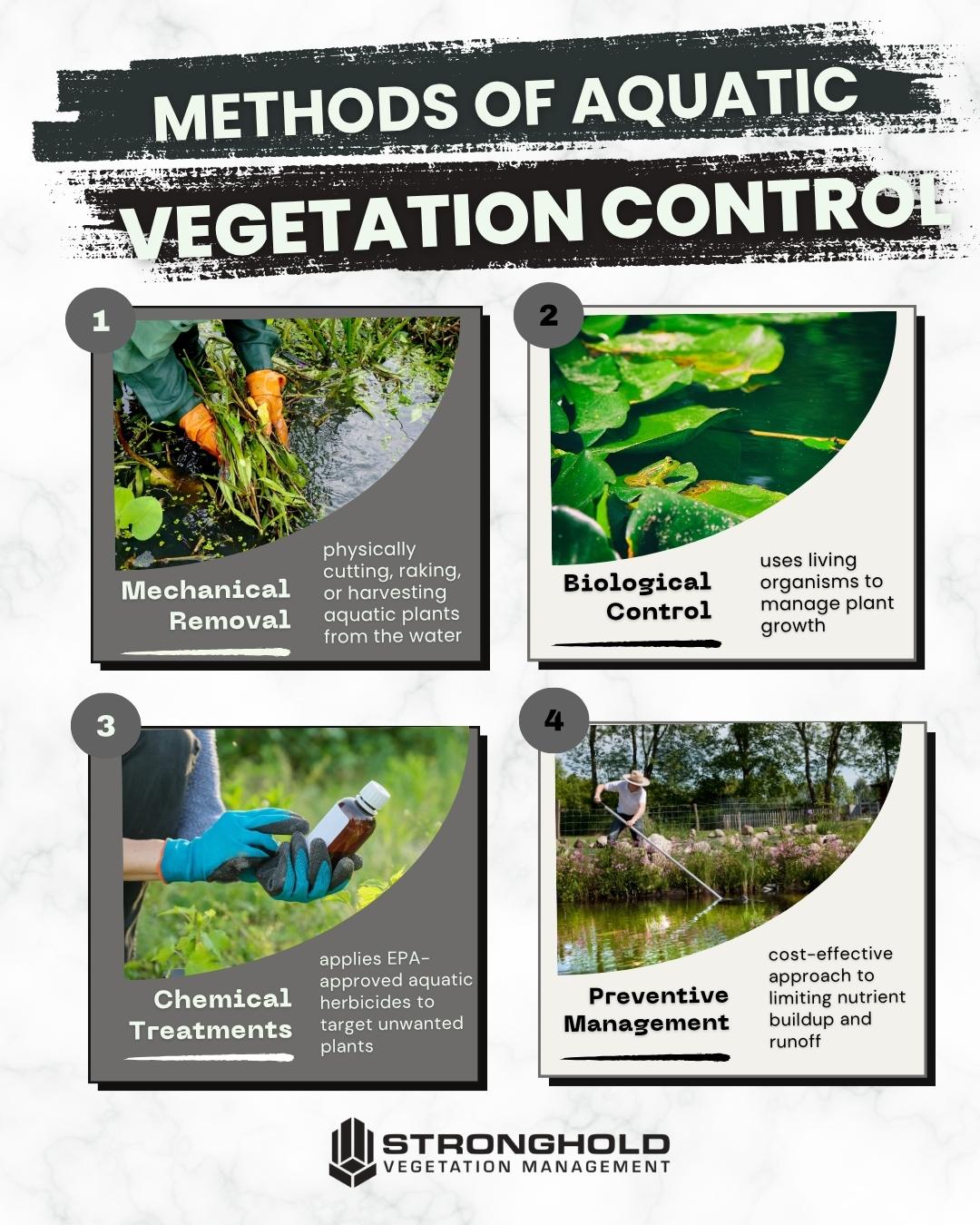
1. Mechanical Removal
This method involves physically cutting, raking, or harvesting aquatic plants from the water. It’s often used for small areas or when quick, visible results are needed.
Pros:
- Mechanical removal provides immediate results and helps restore access to water quickly.
- It avoids the use of chemicals, making it a good fit for sensitive areas.
Cons:
- This method is labor-intensive and can be costly over time.
- Many plants regrow quickly, so the results may only be temporary.
2. Biological Control
Biological control uses living organisms to manage plant growth. One example is introducing sterile grass carp that feed on submerged vegetation.
Pros:
- When properly managed, biological control offers long-term reduction in certain plant species.
- It’s considered an environmentally sustainable option that minimizes chemical use.
Cons:
- This method only works for specific types of vegetation and may not be effective for all problem species.
- In many states, the use of biological agents like grass carp is regulated and may require permits.
3. Chemical Treatments
This approach involves applying EPA-approved aquatic herbicides to target unwanted plants. Treatments can be selective or broad-spectrum, depending on the plant species.
Pros:
- Chemical control is highly effective for treating dense or widespread infestations.
- It can be tailored to target specific plants without harming others.
Cons:
- Applications must be handled by licensed professionals to ensure safety and compliance.
- Some treatments may have timing restrictions or require temporary water use limitations.
4. Preventive Management
Prevention is often the most cost-effective approach, yet it’s commonly overlooked. The goal is to limit nutrient buildup and runoff, which often fuel excessive plant growth.
Pros:
- Preventive measures help reduce the need for more aggressive interventions down the line.
- They support long-term water quality and ecosystem stability.
Cons:
- Preventive steps take time to show results and require consistent monitoring.
- They may not be enough to manage existing infestations on their own.
Dos of Aquatic Vegetation Control
✅ Inspect your waterbody regularly.
Regular inspections help you catch problems before they get out of hand. By checking for changes in plant growth, water clarity, and access around the shoreline, you can spot early signs of overgrowth or imbalance.
Staying proactive makes it easier to plan ahead and avoid expensive, large-scale fixes.
✅ Identify plants before taking action.
Not all aquatic plants are bad—some play a key role in keeping your waterbody stable and healthy. Misidentifying what’s growing could lead to the wrong type of treatment or damage to beneficial species.
If you’re not sure what you’re looking at, consult a local extension office or a vegetation management professional.
✅ Follow all local regulations.
Aquatic vegetation control often involves permits and strict rules, especially for chemical or biological treatments. Using the wrong method without approval can lead to fines or unintended environmental damage.
Always check local requirements or work with a licensed provider who understands the legal side of the job.
✅ Use integrated management strategies.
No single solution will solve every problem. Combining methods—like using preventive practices, targeted herbicide applications, and seasonal cleanups—gives you better, longer-lasting results.
This integrated approach keeps plant growth in check without putting your waterbody at risk.
✅ Consult professionals when needed.
There’s a lot to consider when managing aquatic vegetation, from plant identification to product selection and safe application.
Bringing in a qualified professional takes the guesswork out of the process and ensures you’re not overlooking something important. It’s a smart move that can save you time, money, and headaches down the road.
Don’ts of Aquatic Vegetation Control
🚫Don’t treat the entire waterbody at once.
It might seem faster, but treating everything in one go can lead to major water quality issues. When too much vegetation dies off at once, it can lower oxygen levels and harm fish or other aquatic life. It’s safer and more effective to treat the area in stages.
🚫Don’t rely only on short-term fixes.
Cutting or raking out plants might make things look better right away, but it rarely solves the problem for good.
Without addressing the cause, like nutrient buildup or poor runoff control, plants will likely return. Long-term success comes from treating the problem, not just the symptoms.
🚫Don’t use land-based herbicides near water.
Using the wrong product can contaminate your waterbody and harm fish, insects, or nearby vegetation.
Only use herbicides that are labeled for aquatic use, and follow all instructions carefully. If you’re not trained, it’s best to leave chemical treatments to professionals.
🚫Don’t eliminate all vegetation.
Some aquatic plants help filter pollutants, anchor the shoreline, and support fish habitats. Removing everything can throw the ecosystem off balance and even make future growth harder to manage. Focus on controlling the problem plants while preserving the good ones.
🚫Don’t wait until it’s out of control.
Aquatic vegetation can spread quickly, especially when conditions are right. Waiting too long usually means higher costs, more damage, and more aggressive treatments. The earlier you step in, the easier—and cheaper—it is to manage.
Working With a Vegetation Control Professional
Aquatic vegetation control is a specialized service. For many property owners, hiring a certified contractor saves time, meets legal requirements, and reduces long-term costs.
Here are some things to expect from an expert:
- Site inspection and species identification
- Customized management plan
- Proper permits and compliance
- Safe product application
- Scheduled monitoring and maintenance
Companies like Stronghold Vegetation Management use science-backed approaches to protect water quality while keeping your property looking clean and functional.
Final Thoughts
Aquatic vegetation control protects your property, enhances water quality, and preserves usability. Whether you manage a commercial site or a private lake, it pays to understand what you’re dealing with—and how to handle it correctly.
If you need help evaluating your waterbody or creating a custom control plan, Stronghold Vegetation Management is ready to assist. Contact us today to get started with an expert site assessment.